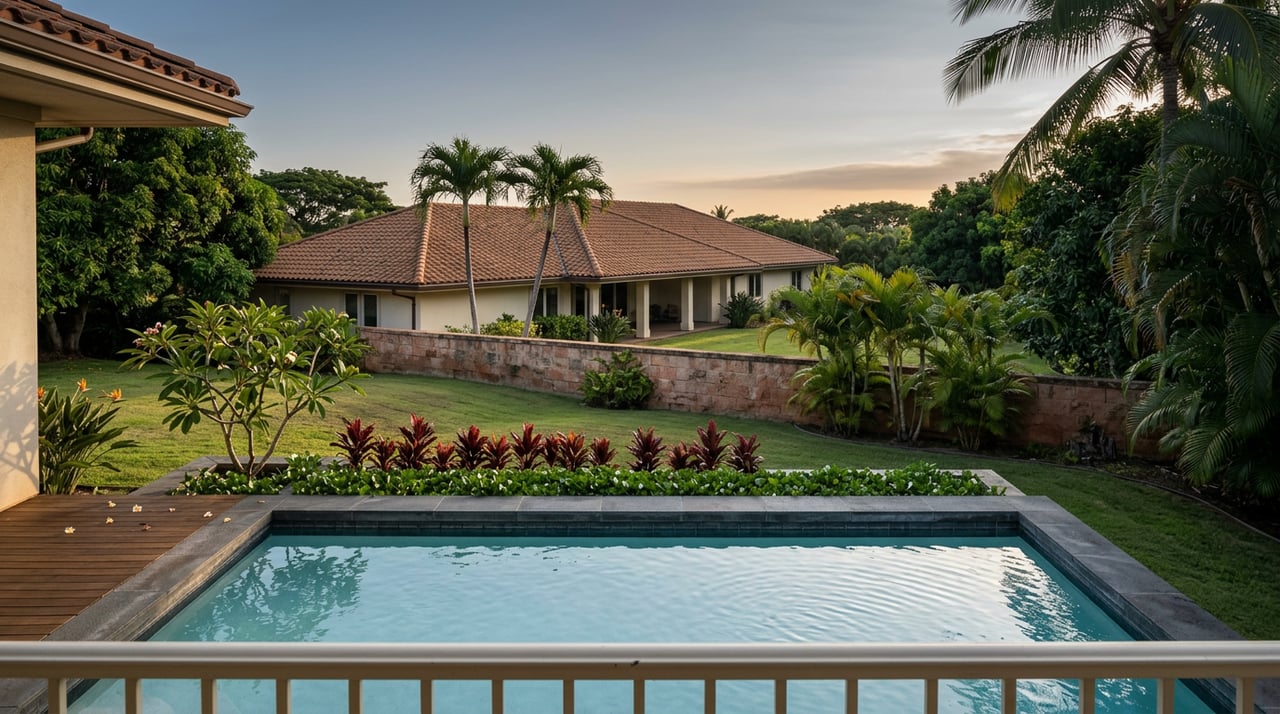
Baby Beach Runs on a Judgment Call, Not a Schedule
September 3, 2026
September 3, 2026
Two things in Koloa happen at the same time every week, down to the minute. The Koloa Sunshine Market sets up at Koloa Ball Park on Maluhia Road at noon on Mondays and packs up by 1:30, produce only, roughly twenty vendors who show up whether it rained that morning or not. The Kaua'i Culinary Market takes over The Shops at Kukui'ula every Wednesday from 3:30 to 6, twenty-five or more growers and vendors, a chef demonstration at 5 p.m., live music drifting through the wine and beer garden until closing. Neither has skipped a week in years. You could set a watch by them.
Poipu Beach Park does not work that way, and that's the part longtime residents figure out only after they've been surprised by it a few times.
Walk down to the calm cove on the east side of the park, the one everybody calls Baby Beach, on two different Tuesday mornings in August and you might get two completely different beaches. One morning it's open, kids wading in the protected shallows, the reef doing its job of keeping the water flat. The next morning there's a loose ring of orange traffic cones and yellow tape strung between them, and the cove that was open yesterday is off limits today. Same season. Same tide patterns. Same time of year. Different outcome, and no posted sign tells you why in advance.
Here's the part that actually explains it. Federal guidance requires at least 150 feet of space between people and a resting monk seal, more if it's a mother with a pup. That part is fixed. What isn't fixed is whether a Seal Resting Area, the cordon of cones and tape, goes up at all.
NOAA has been explicit that setting up an SRA is a judgment call, not an automatic response to every seal that hauls out. Volunteers weigh how crowded the beach already is, whether a natural or manmade boundary already separates people from the animal, and whether the seal picked a remote stretch where few people are likely to walk anyway. If none of that applies, an SRA goes up. If a seal tucks into a corner nobody uses, it might not.
That single piece of discretion is why Baby Beach behaves the way it does. It isn't that the beach has rules that change. It's that the same rule, applied to different situations by different volunteers on different mornings, produces different results. Knowing that changes what you do when you walk down and see the tape. It isn't a closure notice. It's one volunteer's read of the moment, and it can be gone by afternoon.
The seal most likely to be behind that tape at Poipu has a name and a tag number: RH58, known locally as Rocky, has pupped at Poipu multiple times over the years. She isn't a rare passerby. She's a regular, and when she or another mother hauls out to nurse, Hawai'i Marine Animal Response volunteers are the ones who show up to manage the perimeter, not lifeguards, not park staff, but a dedicated response network that coordinates with NOAA and the state's Division of Land and Natural Resources.
Pupping season on Kaua'i runs roughly May through September. By the last week of August, the neighborhood is deep into the tail end of it, not the start. That matters if you've been away from the beach for a few weeks and assume the seal traffic has already died down. It usually hasn't yet.
A few things are worth knowing before you walk down with a towel:
None of this requires special access or a permit. It requires knowing that the tape means something specific and temporary, not a blanket rule for the whole park.
When the Baby Beach cove is roped off, the walk doesn't end there for most locals. Shipwrecks, the long stretch also known as Keoneloa Bay just past the Hyatt, sees less foot traffic than Poipu Beach Park, which is part of why seals like it too. It also happens to have some of the better morning light on this stretch of coast, with the cliffs at Makawehi giving the whole scene a different character than the manicured park a few minutes away. Seals haul out there on both sand and rock, so the same distance rules apply, just with more room to spread out.
Brennecke's, the pocket beach immediately east of the park, is the other regular fallback. It's smaller, rockier in sections, and better suited to bodyboarding than swimming, but it's close enough that redirecting there costs you five minutes, not a wasted trip.
Which brings the week back to where it started. The Monday market at Koloa Ball Park and the Wednesday market at The Shops at Kukui'ula are the parts of this neighborhood's calendar that never move. You can plan a Monday lunch around the noon opening at Koloa Ball Park and know the produce tables will be there. You can plan a Wednesday evening around the 5 p.m. chef demo at Kukui'ula and know the band will be playing by the time you finish a plate.
The coastline doesn't offer that same certainty, and that's not a flaw in how Poipu Beach Park is run. It's what it looks like when a federal conservation program prioritizes an animal's needs over a fixed human schedule. The mother and pup get to decide where they rest. The volunteers get to decide, case by case, how much space to give them. Everyone else adjusts around that, week to week, sometimes morning to morning.
Residents who've lived here through a few pupping seasons stop treating a roped-off cove as an inconvenience and start treating it as information. It tells you Rocky or another mother chose this stretch of sand today, which is a small, specific piece of the South Shore's actual rhythm, distinct from the market schedule and just as real.
If you're weighing a move to this stretch of the South Shore, or already own here and want a clear-eyed read on what's happening in the Poipu and Koloa market, Brenda S. Crawford has spent more than three decades paying attention to exactly this kind of local detail. Reach out for a private conversation about the neighborhood, the market, or both.
This article is general information, not legal, tax or financial advice. Consult a qualified professional about your situation.
Stay up to date on the latest real estate trends.
Etiam non quam lacus suspendisse faucibus interdum. Orci ac auctor augue mauris augue neque. Bibendum at varius vel pharetra. Viverra orci sagittis eu volutpat.