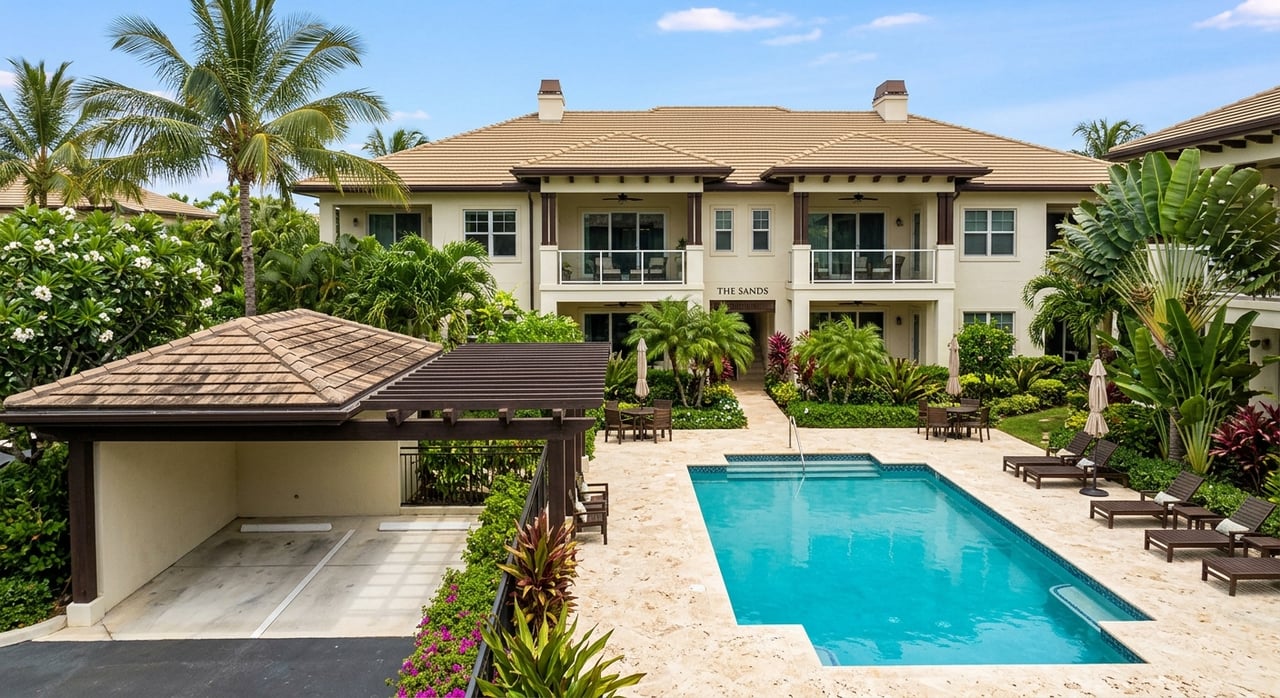
Choosing a Poipu Vacation Rental Property: Condo or Home
July 16, 2026
July 16, 2026
If you are deciding between a Poipu condo and a home for vacation-rental use, the choice is usually less about property type alone and more about legal use, carrying costs, and the guest experience you want to offer. Many buyers arrive expecting condos to be far cheaper and homes to bring much higher upside, but in Poipu and Koloa, the math is often more nuanced. This guide will help you compare the two with a clear, local lens so you can make a smarter purchase decision. Let’s dive in.
In Poipu, vacation-rental strategy starts with county rules, not floor plans. On Kauai, whether a property can be used for short-term rental often depends on the exact parcel, its location within the Visitor Destination Area, and the property’s use status.
County code allows multi-family transient vacation rentals in resort districts and residential districts inside the Visitor Destination Area. Single-family transient vacation rentals outside a Visitor Destination Area are generally prohibited unless they qualify as a grandfathered nonconforming use. That means the exact TMK can matter just as much as whether you are buying a condo or a house.
For buyers, this changes the usual condo-versus-home conversation. A beautiful home with strong rental appeal may not fit your strategy if it lacks the right legal path for short-term use. A condo in the right project may offer more certainty, even if it comes with monthly dues and association rules.
Many mainland buyers assume the jump from condo to home in Poipu is dramatic. Recent market snapshots suggest the gap can be narrower than expected, especially when you stay focused on the Poipu resort area rather than broader island averages.
Recent data shows a Poipu median listing price of about $1.024 million, while Poipu homes sold at a median of about $1.053 million over the three months ending May 2026. Poipu condos were listed at a median of about $925,000.
Broader Koloa numbers show more spread. Realtor.com reports a Koloa median listing price of $1.4 million, while Redfin shows Koloa condos at a median listing price of $705,000. The larger lesson is that project, view, location, and vacation-rental eligibility often drive price more than property type alone.
Island-wide data supports that point. The Kauai Board’s January 2026 market sheet showed median sold prices of $987,500 for single-family homes and $965,000 for condominiums, which shows how close the two categories can be in this market.
A condo can be the more turnkey option if you want a lower-maintenance ownership experience. In resort-oriented areas like Poipu, many buyers like the appeal of shared amenities, managed grounds, and a property that can feel more plug-and-play.
That convenience can be valuable if you plan to rent the property consistently or use it as a second home without taking on as much exterior upkeep. In many condo projects, the association handles part of the exterior maintenance and common areas, which can reduce the day-to-day burden on an owner.
Condos may also line up well with a guest experience that feels more hotel-like. In a resort market, amenities and ease of use can support guest appeal, especially when the project has features that match what travelers expect in a vacation setting.
The biggest condo advantage can also be the biggest caution. Monthly HOA or AOAO dues, association governance, insurance conditions, and reserve strength all affect your real carrying cost.
Hawaii condo owners face some of the highest HOA fees in the country, and the condominium insurance market has become increasingly unstable for many associations. State guidance also notes that special assessments can be substantial when reserves are inadequate.
That means you should look beyond purchase price and projected rent. Before you buy a Poipu condo, review the association’s rental rules, financial reserves, insurance situation, parking rules, and whether the amenities truly justify the monthly fee.
A single-family home usually offers a different kind of value. If your strategy includes personal use, more privacy, or a guest setup with outdoor living space, a home may fit your goals better than a condo.
Homes can offer more flexible spacing, more room for owner enjoyment between bookings, and features that may support longer stays. In Poipu, outdoor areas, barbecue space, and flexible parking can matter when you are thinking about how guests will use the property.
For some buyers, that makes a house feel like both an investment and a lifestyle purchase. If your plan is to spend meaningful time on Kauai yourself, the ownership experience may carry as much weight as the income model.
With single-family homes, the biggest issue is usually not desirability. It is legal certainty and operational compliance.
Single-family transient vacation rentals outside a Visitor Destination Area are generally not allowed unless they are grandfathered as a nonconforming use. Even permitted homes inside a Visitor Destination Area must still follow county operating rules, including requirements such as a 24/7 contact person, neighbor notification, posted guest guidance, and ad disclosure of the registration number.
The county can impose fines ranging from $500 to $10,000 per offense for violations. For that reason, a home can be an excellent vacation-rental asset only when the parcel’s use status has been fully confirmed before you close.
Short-term rental ownership on Kauai comes with a tax and filing stack that should be part of your decision from the beginning. If you rent for less than 180 consecutive days, the rental is subject to Hawaii GET and TAT, and Kauai also levies a separate 3% county TAT that must be paid in a separate transaction.
The state requires GET and TAT registration for short-term rental operators. Even if a property manager handles filings, the owner remains responsible.
The registration fees themselves are modest, but the ongoing compliance burden still matters. If you are comparing a condo and a home, be realistic about not just gross income but also the reporting and management rhythm that comes with the property.
On Kauai, real property is taxed by actual use, not just zoning. This is one of the most important points for buyers who are comparing a personal-use property with a vacation-rental property.
For the fiscal year from July 1, 2025, to June 30, 2026, the county’s vacation-rental tax rate is $11.30, $11.75, or $12.20 per $1,000 of net assessed value, while the owner-occupied rate is $2.59. On a $1,000,000 net taxable value, that works out to roughly $11,300 for a vacation rental versus $2,590 for an owner-occupied home before exemptions.
This is why sticker price alone can be misleading. Two properties with similar purchase prices may carry very different annual costs depending on how they are actually used.
If you want a lower-maintenance, amenity-driven property and you are comfortable underwriting HOA dues, insurance risk, and possible special assessments, a condo may be the better fit. It often works well for buyers who want a more streamlined ownership experience in a resort setting.
If you want privacy, outdoor space, and more personal-use flexibility, a single-family home may be the better match. That said, the home only makes sense as a vacation-rental strategy if the exact parcel is legally usable for short-term rental.
In Poipu, the best buy is often the property type that matches the guest experience you want to deliver and the ownership experience you want for yourself. For many buyers, the smartest path is to compare net operating economics first and legal certainty second, then weigh convenience versus space.
Before you move forward on a condo or a home, confirm the facts that affect both income potential and risk. This step is especially important in Poipu and Koloa, where location-specific rules can change the value of a property for vacation-rental use.
Use this checklist before you write or remove contingencies:
These steps help you compare properties on facts, not assumptions. They also help you avoid overpaying for a property that looks strong on paper but carries hidden limitations.
For buyers considering South Shore vacation-rental property, local knowledge matters at every stage, from project selection to file review to understanding how a property will actually perform in the real world. If you want a clear, tailored strategy for Poipu or Koloa, connect with Brenda Crawford for a private market consultation.
Stay up to date on the latest real estate trends.


Etiam non quam lacus suspendisse faucibus interdum. Orci ac auctor augue mauris augue neque. Bibendum at varius vel pharetra. Viverra orci sagittis eu volutpat.