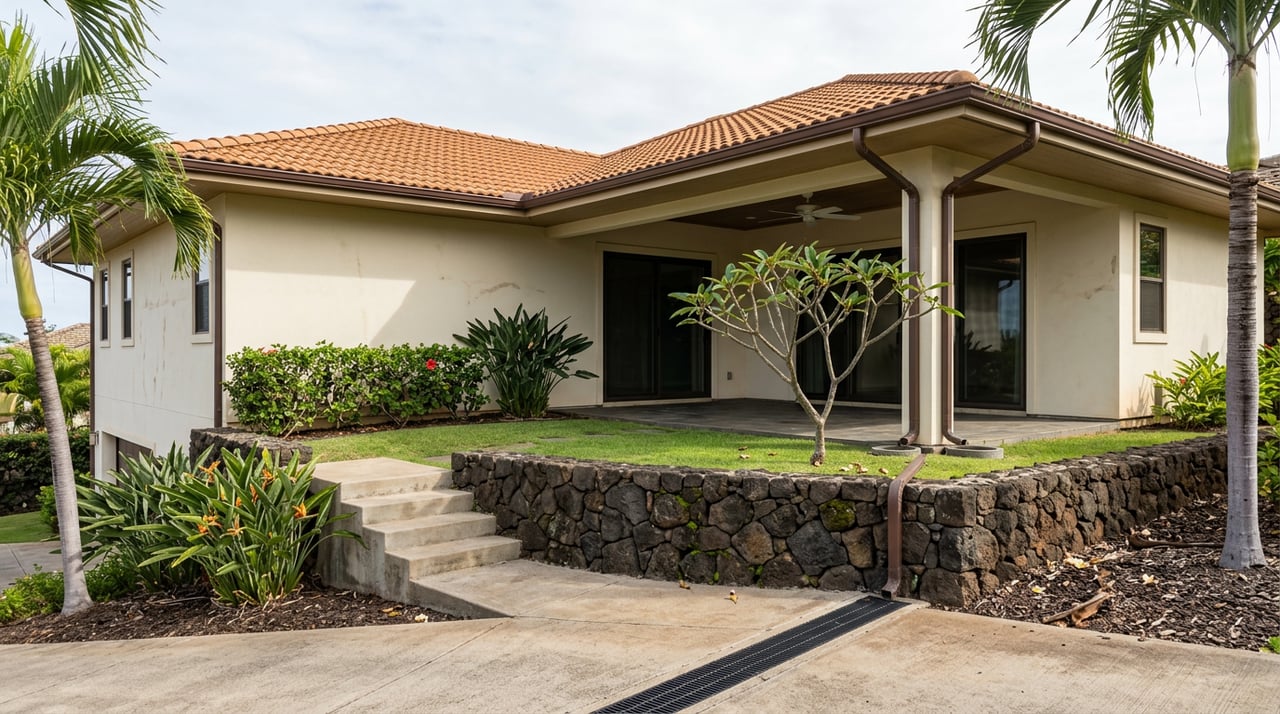
Kalaheo View Homes Guide for Hillside Buyers
March 24, 2026
March 24, 2026
You want a sweeping ocean view without being right on the shoreline. Kalaheo’s hills and valleys can deliver that big-sky panorama along with cooler evenings and extra privacy. At the same time, hillside living asks you to think about driveways, drainage, retaining walls, and permits before you buy. In this guide, you’ll learn how Kalaheo’s elevation and microclimate affect views and comfort, what to inspect on sloped lots, and how to compare costs and risks with nearby Poipu oceanfront options. Let’s dive in.
Kalaheo sits in the foothills above Koloa and Poipu on Kauai’s South Shore. Many homes are several hundred feet above sea level, commonly around 680 feet near the town center. That height often brings wider ocean horizons and layered mountain-to-sea vistas. You also feel a touch more breeze and cooler nights compared with the coast. You can confirm the area’s elevation and terrain using the local USGS Koloa topo map for context.
Island topography and the trade winds create sharp local differences in sun, showers, and wind. Even a few miles can change your day-to-day weather. Trade winds lift moist air over the island, which tends to make mountain slopes wetter and the southern coast drier on average. Kalaheo’s upslope position can mean more clouds at times and a fresher feel in the evenings.
Tip: Visit a property at sunrise, midafternoon, and sunset, and again during a passing trade-wind shower. Note where clouds sit, how the wind moves across the lanai, and which view lines stay clear most of the day.
Because many Kalaheo parcels sit on terraces or slopes, driveways can be steep or long. This can affect construction costs, daily convenience, and emergency access. Ask who maintains a private road or shared driveway and whether there is a recorded agreement. If you plan to resurface, widen, or add drainage features, expect permit reviews.
Practical steps:
On hillside lots, water management is as important as the view. Concentrated runoff from roofs and drives can erode soil and stress retaining walls. Saturated soils can create slow slope movement over time. A geotechnical engineer can assess subsurface conditions and recommend the right foundation and wall design for your exact site.
What to include in inspections:
Kalaheo hillside homes often mean more vegetation care, routine drainage checks, and driveway upkeep. You should plan to clear weep holes on walls, keep gutters clean, and inspect for wood decay or termite activity on a set schedule. Hawaii’s subterranean and drywood termites make proactive prevention a smart standard.
If you are comparing with a Poipu oceanfront home, keep in mind the coast brings more salt exposure. That can accelerate corrosion on fasteners, flashing, hardware, and HVAC components, which often means more frequent maintenance cycles. If you decide the shoreline is a better fit, ask about corrosion-resistant materials and protective coatings in your inspection scope.
Inland hillside properties usually avoid primary coastal flood exposure, but every parcel is different. Some locations can still be in FEMA flood zones or have unique drainage conditions. Coastal locations can require flood insurance and may have higher wind or hurricane endorsements. Start your insurance conversations early in the process so you know premiums and available coverage before you remove contingencies.
Use this quick checklist to turn hillside and view factors into clear offer protections.
Bonus value add:
Choose Kalaheo if you want broad ocean and mountain views, cooler evenings, and a more private, green setting. Budget for possible driveway work, grading, and active drainage stewardship. Choose Poipu if you want easy access to beaches, resort conveniences, and flatter lots, while planning for salt exposure and a full coastal hazard and insurance review.
Not sure which trade-offs fit your lifestyle and risk comfort? A side-by-side comparison of specific properties with permits, inspection scopes, and insurance quotes will make the answer clear.
If a hillside ocean view is calling, pair it with smart diligence and the right local guidance. For a curated list of Kalaheo and South Shore properties plus a due diligence plan tailored to your top contenders, connect with Brenda Crawford for a confidential consultation.
Stay up to date on the latest real estate trends.
Etiam non quam lacus suspendisse faucibus interdum. Orci ac auctor augue mauris augue neque. Bibendum at varius vel pharetra. Viverra orci sagittis eu volutpat.